<?xml version="1.0" encoding="utf-8" ?>
<rdf:RDF xmlns:rdf="http://www.w3.org/1999/02/22-rdf-syntax-ns#" xmlns:dc="http://purl.org/dc/elements/1.1/" xmlns:syn="http://purl.org/rss/1.0/modules/syndication/" xmlns="http://purl.org/rss/1.0/">


<channel rdf:about="http://groundwatercop.iwlearn.net/search_rss">
  <title>Groundwater CoP</title>
  <link>http://groundwatercop.iwlearn.net</link>

  <description>
    
            These are the search results for the query, showing results 1 to 15.
        
  </description>


  <image rdf:resource="http://groundwatercop.iwlearn.net/logo.png"/>

  <items>
    <rdf:Seq>
      
        <rdf:li rdf:resource="http://groundwatercop.iwlearn.net/news/irbm-partnership/d133660cc64664b328462ed1c645b883"/>
      
      
        <rdf:li rdf:resource="http://groundwatercop.iwlearn.net/news/irbm-partnership/5156ff65d87e452a672bc33e355172c0"/>
      
      
        <rdf:li rdf:resource="http://groundwatercop.iwlearn.net/news/irbm-partnership/9dac865d8234577ccef774880f2a0db2"/>
      
      
        <rdf:li rdf:resource="http://groundwatercop.iwlearn.net/images/worldshad.png"/>
      
      
        <rdf:li rdf:resource="http://groundwatercop.iwlearn.net/news/iw-learn-news/d9fec9f849b68da0f9fb818c3c567645"/>
      
      
        <rdf:li rdf:resource="http://groundwatercop.iwlearn.net/news/iw-learn-news/7581a8ff78485407962997eb7d805134"/>
      
      
        <rdf:li rdf:resource="http://groundwatercop.iwlearn.net/ggreta/pretashkent/working-meeting"/>
      
      
        <rdf:li rdf:resource="http://groundwatercop.iwlearn.net/news/iucn-water-partners/071ca9926041ef4443a0c2a69ba25061"/>
      
      
        <rdf:li rdf:resource="http://groundwatercop.iwlearn.net/news/iucn-water-partners/14933e71003e7e304851498100dd0667"/>
      
      
        <rdf:li rdf:resource="http://groundwatercop.iwlearn.net/images/webinar.png"/>
      
      
        <rdf:li rdf:resource="http://groundwatercop.iwlearn.net/webinars"/>
      
      
        <rdf:li rdf:resource="http://groundwatercop.iwlearn.net/webinar-groundwater-in-global-processes-iywc-post-2015-sdgs"/>
      
      
        <rdf:li rdf:resource="http://groundwatercop.iwlearn.net/images/copy_of_webinarscreen_play.jpg"/>
      
      
        <rdf:li rdf:resource="http://groundwatercop.iwlearn.net/images/webinarscreen_play.jpg"/>
      
      
        <rdf:li rdf:resource="http://groundwatercop.iwlearn.net/images/webinar-agenda2"/>
      
    </rdf:Seq>
  </items>

</channel>


  <item rdf:about="http://groundwatercop.iwlearn.net/news/irbm-partnership/d133660cc64664b328462ed1c645b883">
    <title>WWF: Global system to curb aircraft emissions could easily take flight</title>
    <link>http://groundwatercop.iwlearn.net/news/irbm-partnership/d133660cc64664b328462ed1c645b883</link>
    <description>   A global system to regulate runaway greenhouse gas emissions from aviation is technically and economically feasible and could help address climate change, according to a new WWF report.  The report comes ahead of a critical meeting of the High Level Group established by the International Civil Aviation Organization (ICAO) in Montreal this week, where governments will attempt to revive a decade-long effort to address aviation emissions.   Aviation is the most emission-intensive form of transport on the planet and, together with shipping, is the fastest growing source of carbon emissions contributing to climate instability and extreme weather.  Aviation Report:  Market Based Mechanisms to Curb Greenhouse Gas emissions from International Aviation outlines four options, and weighs their pros and cons, to develop a global system to regulate emissions from aircraft.  These include offsetting, offsetting with a revenue generating mechanism, a cap and trade emissions trading system, and a levy with offsetting.  The report finds that the latter three options can both cut pollution at the least cost to industry, and also generate funds that could be used to support global efforts to address climate change, while maintaining a level playing field between airlines.  "We invite governments to end 10 years of delay and reach a global deal on aviation. That deal is within reach and it would limit emissions and ensure that the sector pays its way in global efforts to address climate change and the extreme weather it is causing," says Samantha Smith, leader of the WWF's Global Climate &amp; Energy Initiative.  In the absence of such an agreement in ICAO this year aviation pollution will continue to rise and contribute to dangerous climate instability, she says. In addition, airlines will face a growing patchwork of international regulations, including under the EU-ETS, where all flights into and out of the EU were to be included this year. The inclusion was only suspended for one year to give time for ICAO to present a solution.  A multilateral agreement under ICAO remains the best way to address emissions from international aviation fairly. "There has never been a more opportune time to do something about this. We just need the political will and courage to make a global market-based measure happen," says Smith. </description>
    <content:encoded xmlns:content="http://purl.org/rss/1.0/modules/content/"><![CDATA[<a href="http://wwf.panda.org/wwf_news/?uNewsID=207383"><img align="left" alt="Aviation is the most emission-intensive form of transport on the planet &amp;copy;&amp;nbsp;Chris Martin Bahr / WWF-Canon" border="0" height="98" hspace="4" src="http://awsassets.panda.org/img/airplane_436013.jpg" vspace="2" width="146" /></a>A global system to regulate runaway greenhouse gas emissions from aviation is technically and economically feasible and could help address climate change, according to a new WWF report.<br /><br />The report comes ahead of a critical meeting of the High Level Group established by the International Civil Aviation Organization (ICAO) in Montreal this week, where governments will attempt to revive a decade-long effort to address aviation emissions. <br /><br />Aviation is the most emission-intensive form of transport on the planet and, together with shipping, is the fastest growing source of carbon emissions contributing to climate instability and extreme weather.<br /><br />Aviation Report:  Market Based Mechanisms to Curb Greenhouse Gas emissions from International Aviation outlines four options, and weighs their pros and cons, to develop a global system to regulate emissions from aircraft.<br /><br />These include offsetting, offsetting with a revenue generating mechanism, a cap and trade emissions trading system, and a levy with offsetting.<br /><br />The report finds that the latter three options can both cut pollution at the least cost to industry, and also generate funds that could be used to support global efforts to address climate change, while maintaining a level playing field between airlines.<br /><br />"We invite governments to end 10 years of delay and reach a global deal on aviation. That deal is within reach and it would limit emissions and ensure that the sector pays its way in global efforts to address climate change and the extreme weather it is causing," says Samantha Smith, leader of the WWF's Global Climate &amp; Energy Initiative.<br /><br />In the absence of such an agreement in ICAO this year aviation pollution will continue to rise and contribute to dangerous climate instability, she says. In addition, airlines will face a growing patchwork of international regulations, including under the EU-ETS, where all flights into and out of the EU were to be included this year. The inclusion was only suspended for one year to give time for ICAO to present a solution.<br /><br />A multilateral agreement under ICAO remains the best way to address emissions from international aviation fairly. "There has never been a more opportune time to do something about this. We just need the political will and courage to make a global market-based measure happen," says Smith.<br /><div class="feedflare">
<a href="http://feeds.panda.org/~ff/wwf/news?a=J2uaeOoavEs:xVJpHxvO-F0:qj6IDK7rITs"><img border="0" src="http://feeds.feedburner.com/~ff/wwf/news?d=qj6IDK7rITs" /></a> <a href="http://feeds.panda.org/~ff/wwf/news?a=J2uaeOoavEs:xVJpHxvO-F0:I9og5sOYxJI"><img border="0" src="http://feeds.feedburner.com/~ff/wwf/news?d=I9og5sOYxJI" /></a> <a href="http://feeds.panda.org/~ff/wwf/news?a=J2uaeOoavEs:xVJpHxvO-F0:yIl2AUoC8zA"><img border="0" src="http://feeds.feedburner.com/~ff/wwf/news?d=yIl2AUoC8zA" /></a> <a href="http://feeds.panda.org/~ff/wwf/news?a=J2uaeOoavEs:xVJpHxvO-F0:-BTjWOF_DHI"><img border="0" src="http://feeds.feedburner.com/~ff/wwf/news?i=J2uaeOoavEs:xVJpHxvO-F0:-BTjWOF_DHI" /></a> <a href="http://feeds.panda.org/~ff/wwf/news?a=J2uaeOoavEs:xVJpHxvO-F0:F7zBnMyn0Lo"><img border="0" src="http://feeds.feedburner.com/~ff/wwf/news?i=J2uaeOoavEs:xVJpHxvO-F0:F7zBnMyn0Lo" /></a> <a href="http://feeds.panda.org/~ff/wwf/news?a=J2uaeOoavEs:xVJpHxvO-F0:gIN9vFwOqvQ"><img border="0" src="http://feeds.feedburner.com/~ff/wwf/news?i=J2uaeOoavEs:xVJpHxvO-F0:gIN9vFwOqvQ" /></a> <a href="http://feeds.panda.org/~ff/wwf/news?a=J2uaeOoavEs:xVJpHxvO-F0:V_sGLiPBpWU"><img border="0" src="http://feeds.feedburner.com/~ff/wwf/news?i=J2uaeOoavEs:xVJpHxvO-F0:V_sGLiPBpWU" /></a>
</div><img height="1" src="http://feeds.feedburner.com/~r/wwf/news/~4/J2uaeOoavEs" width="1" />]]></content:encoded>
    <dc:publisher>No publisher</dc:publisher>
    <dc:creator>taya</dc:creator>
    <dc:rights></dc:rights>
    <dc:date>2013-02-22T08:21:37Z</dc:date>
    <dc:type>Feed Item</dc:type>
  </item>


  <item rdf:about="http://groundwatercop.iwlearn.net/news/irbm-partnership/5156ff65d87e452a672bc33e355172c0">
    <title>WWF welcomes APP announcement to halt clearing, urges paper buyers to wait for proof</title>
    <link>http://groundwatercop.iwlearn.net/news/irbm-partnership/5156ff65d87e452a672bc33e355172c0</link>
    <description>   JAKARTA – WWF welcomed the announcement that the Sinar Mas Group's Asia Pulp &amp; Paper (APP) have stopped clearing Indonesia's tropical forests and peatlands to allow an assessment of their conservation and carbon values. But the conservation organization urged paper buyers to wait for confirmation of the claims through independent monitoring by civil society before doing business with APP.  "APP today committed to most of WWF's calls. If the company follows through on this, it could be great news for Indonesia's forests, biodiversity and citizens," said Nazir Foead, Conservation Director of WWF-Indonesia.   "Unfortunately, APP has a long history of making commitments to WWF, customers and other stakeholders that it has failed to live up to. We hope this time the company does what it promised. WWF plans to independently monitor APP's wood sourcing and forestry activities for compliance with its commitments and regularly update stakeholders on the findings," Foead added.  APP runs two of the world's largest pulp mills on Sumatra, where it produces the pulp for the toilet paper, tissue, copy paper and packaging that it sells worldwide. The company and its wood suppliers are responsible for clearing more than 2 million hectares of rain forest on the island since beginning operations in 1984, an analysis by the NGO coalition Eyes on the Forest found.   "WWF hopes that APP's new commitments will do more than just stop its own bulldozers, including protecting the natural forests in its concessions from all illegal activities and mitigating the long-term negative impacts its practices have had on all the peat lands, forests, biodiversity and local people in Sumatra and Borneo for which these commitments have come too late," Foead added.   "WWF has long called on responsible businesses to avoid sourcing from APP and until there is truly independent confirmation that APP has stopped draining peat soils and pulping tropical forests with high conservation value, we continue to urge paper buyers to adopt a wait for proof stance," said Aditya Bayunanda, GFTN and pulp &amp; paper manager of WWF Indonesia.  Mr Teguh Widjaya, the patriarch of the family's pulp and paper business, oversaw the announcement today that no member of his APP group operating in Indonesia or China will accept any tropical timber felled in Indonesia after 31 January 2013 until company consultants have completed a full "high conservation value" and a "high carbon stock" assessment of their forest concessions.   However, the company inserted a loophole in the commitment saying that for an indefinite period of time APP mills would accept trees felled before 31 January.  As a sign of good faith and the first demonstrable milestone, WWF calls on APP to have moved the supply of already-cut tropical timber its suppliers cleared before the self-imposed 31 January 2013 moratorium by 5 May 2013, the due date of its next quarterly forest policy report.  A fully implemented moratorium on pulping forests with high conservation and high carbon value would have a profound impact on Indonesia's biodiversity, as well as on Indonesia's carbon emissions. WWF urges all of the country's pulp producers to stop using tropical forests. </description>
    <content:encoded xmlns:content="http://purl.org/rss/1.0/modules/content/"><![CDATA[<a href="http://wwf.panda.org/wwf_news/?uNewsID=207497"><img align="left" alt="Peat draining and large-scale clearance of natural forest by APP wood supplier PT. Ruas Utama Jaya inside APP's Senepis Tiger Sanctuary in June and October 2011 &amp;copy;&amp;nbsp;Eyes on the Forest / WWF-Indonesia" border="0" height="109" hspace="4" src="http://awsassets.panda.org/img/photo_3_in_map_6_422021.jpg" vspace="2" width="146" /></a><strong>JAKARTA</strong> &#8211; WWF welcomed the announcement that the Sinar Mas Group's Asia Pulp &amp; Paper (APP) have stopped clearing Indonesia's tropical forests and peatlands to allow an assessment of their conservation and carbon values. But the conservation organization urged paper buyers to wait for confirmation of the claims through independent monitoring by civil society before doing business with APP.<br /><br />"APP today committed to most of WWF's calls. If the company follows through on this, it could be great news for Indonesia's forests, biodiversity and citizens," said Nazir Foead, Conservation Director of WWF-Indonesia. <br /><br />"Unfortunately, APP has a long history of making commitments to WWF, customers and other stakeholders that it has failed to live up to. We hope this time the company does what it promised. WWF plans to independently monitor APP's wood sourcing and forestry activities for compliance with its commitments and regularly update stakeholders on the findings," Foead added.<br /><br />APP runs two of the world's largest pulp mills on Sumatra, where it produces the pulp for the toilet paper, tissue, copy paper and packaging that it sells worldwide. The company and its wood suppliers are responsible for clearing more than 2 million hectares of rain forest on the island since beginning operations in 1984, an analysis by the NGO coalition Eyes on the Forest found. <br /><br />"WWF hopes that APP's new commitments will do more than just stop its own bulldozers, including protecting the natural forests in its concessions from all illegal activities and mitigating the long-term negative impacts its practices have had on all the peat lands, forests, biodiversity and local people in Sumatra and Borneo for which these commitments have come too late," Foead added. <br /><br />"WWF has long called on responsible businesses to avoid sourcing from APP and until there is truly independent confirmation that APP has stopped draining peat soils and pulping tropical forests with high conservation value, we continue to urge paper buyers to adopt a wait for proof stance," said Aditya Bayunanda, GFTN and pulp &amp; paper manager of WWF Indonesia.<br /><br />Mr Teguh Widjaya, the patriarch of the family's pulp and paper business, oversaw the announcement today that no member of his APP group operating in Indonesia or China will accept any tropical timber felled in Indonesia after 31 January 2013 until company consultants have completed a full "high conservation value" and a "high carbon stock" assessment of their forest concessions. <br /><br />However, the company inserted a loophole in the commitment saying that for an indefinite period of time APP mills would accept trees felled before 31 January.<br /><br />As a sign of good faith and the first demonstrable milestone, WWF calls on APP to have moved the supply of already-cut tropical timber its suppliers cleared before the self-imposed 31 January 2013 moratorium by 5 May 2013, the due date of its next quarterly forest policy report.<br /><br />A fully implemented moratorium on pulping forests with high conservation and high carbon value would have a profound impact on Indonesia's biodiversity, as well as on Indonesia's carbon emissions. WWF urges all of the country's pulp producers to stop using tropical forests.<br /><div class="feedflare">
<a href="http://feeds.panda.org/~ff/wwf/news?a=ZQIsXJxh0uQ:Kbl-MSSjRbY:qj6IDK7rITs"><img border="0" src="http://feeds.feedburner.com/~ff/wwf/news?d=qj6IDK7rITs" /></a> <a href="http://feeds.panda.org/~ff/wwf/news?a=ZQIsXJxh0uQ:Kbl-MSSjRbY:I9og5sOYxJI"><img border="0" src="http://feeds.feedburner.com/~ff/wwf/news?d=I9og5sOYxJI" /></a> <a href="http://feeds.panda.org/~ff/wwf/news?a=ZQIsXJxh0uQ:Kbl-MSSjRbY:yIl2AUoC8zA"><img border="0" src="http://feeds.feedburner.com/~ff/wwf/news?d=yIl2AUoC8zA" /></a> <a href="http://feeds.panda.org/~ff/wwf/news?a=ZQIsXJxh0uQ:Kbl-MSSjRbY:-BTjWOF_DHI"><img border="0" src="http://feeds.feedburner.com/~ff/wwf/news?i=ZQIsXJxh0uQ:Kbl-MSSjRbY:-BTjWOF_DHI" /></a> <a href="http://feeds.panda.org/~ff/wwf/news?a=ZQIsXJxh0uQ:Kbl-MSSjRbY:F7zBnMyn0Lo"><img border="0" src="http://feeds.feedburner.com/~ff/wwf/news?i=ZQIsXJxh0uQ:Kbl-MSSjRbY:F7zBnMyn0Lo" /></a> <a href="http://feeds.panda.org/~ff/wwf/news?a=ZQIsXJxh0uQ:Kbl-MSSjRbY:gIN9vFwOqvQ"><img border="0" src="http://feeds.feedburner.com/~ff/wwf/news?i=ZQIsXJxh0uQ:Kbl-MSSjRbY:gIN9vFwOqvQ" /></a> <a href="http://feeds.panda.org/~ff/wwf/news?a=ZQIsXJxh0uQ:Kbl-MSSjRbY:V_sGLiPBpWU"><img border="0" src="http://feeds.feedburner.com/~ff/wwf/news?i=ZQIsXJxh0uQ:Kbl-MSSjRbY:V_sGLiPBpWU" /></a>
</div><img height="1" src="http://feeds.feedburner.com/~r/wwf/news/~4/ZQIsXJxh0uQ" width="1" />]]></content:encoded>
    <dc:publisher>No publisher</dc:publisher>
    <dc:creator>taya</dc:creator>
    <dc:rights></dc:rights>
    <dc:date>2013-02-22T08:20:24Z</dc:date>
    <dc:type>Feed Item</dc:type>
  </item>


  <item rdf:about="http://groundwatercop.iwlearn.net/news/irbm-partnership/9dac865d8234577ccef774880f2a0db2">
    <title>WWF urges Indonesian pulp producer APRIL to immediately stop pulping tropical forests</title>
    <link>http://groundwatercop.iwlearn.net/news/irbm-partnership/9dac865d8234577ccef774880f2a0db2</link>
    <description>   JAKARTA – Following the announcement by Asia Pulp &amp; Paper that it has stopped all clearance of Indonesian forests, WWF is now calling on its competitor Asia Pacific Resources International Limited (APRIL) to stop pulping tropical rainforest.   "APRIL is now the single largest converter of natural forest among Indonesia's pulp producers," said Nazir Foead, Conservation Director of WWF-Indonesia. "We urge the company to immediately change their unsustainable business model and stop draining our peat soils and converting our forests".  The Sumatran NGO coalition Eyes on the Forest reported that APRIL has become the Province of Riau's largest agent of deforestation, cutting at least 140,000 ha of tropical forest, mostly located on peat soils, between 2008 and 2011. APRIL was thus responsible for almost 1/3 of all tropical forest loss in Riau during that period.  APRIL's public commitments to sustainable and natural forest fiber free operations after 2009 has been greenwashing. APRIL in Riau knowingly pulped natural forest wood from concessions inside areas that were designated for protection according to national regulations. The company's operations caused serious conflict with local communities especially because of the loss of traditionally owned forests and land, and degradation of natural resources.   Two thirds of the company's supplying concessions in Riau are located on peat soils whose deforestation, drainage and associated decomposition are leading to constant green house gas emissions.  "Despite being in business for 17 years and having access to concessions covering 10% of Riau's landmass, the company still relies on pulping tropical forests," said Nazir Foead. "After their devastating deforestation of Riau in Sumatra, the company now appears to be developing their next epicenter of deforestation on the island of Borneo."   "WWF calls on APRIL to stop pulping tropical forests, solve social conflicts and restore the forests and peatlands it has destroyed," said Aditya Bayunanda, GFTN and pulp &amp; paper manager of WWF Indonesia, "and calls on companies to avoid being associated with the business practices of APRIL and its associated companies." </description>
    <content:encoded xmlns:content="http://purl.org/rss/1.0/modules/content/"><![CDATA[<a href="http://wwf.panda.org/wwf_news/?uNewsID=207578"><img align="left" alt="Drainage canal inside APRIL acacia concession on peat soil in Pelalawan, Riau, Sumatra. &amp;copy;&amp;nbsp;WWF-Indonesia / Koko Yulianto" border="0" height="97" hspace="4" src="http://awsassets.panda.org/img/april_437230.jpg" vspace="2" width="146" /></a><strong>JAKARTA</strong> &#8211; Following the announcement by Asia Pulp &amp; Paper that it has stopped all clearance of Indonesian forests, WWF is now calling on its competitor Asia Pacific Resources International Limited (APRIL) to stop pulping tropical rainforest. <br /><br />"APRIL is now the single largest converter of natural forest among Indonesia's pulp producers," said Nazir Foead, Conservation Director of WWF-Indonesia. "We urge the company to immediately change their unsustainable business model and stop draining our peat soils and converting our forests".<br /><br />The Sumatran NGO coalition Eyes on the Forest reported that APRIL has become the Province of Riau's largest agent of deforestation, cutting at least 140,000 ha of tropical forest, mostly located on peat soils, between 2008 and 2011. APRIL was thus responsible for almost 1/3 of all tropical forest loss in Riau during that period.<br /><br />APRIL's public commitments to sustainable and natural forest fiber free operations after 2009 has been greenwashing. APRIL in Riau knowingly pulped natural forest wood from concessions inside areas that were designated for protection according to national regulations. The company's operations caused serious conflict with local communities especially because of the loss of traditionally owned forests and land, and degradation of natural resources. <br /><br />Two thirds of the company's supplying concessions in Riau are located on peat soils whose deforestation, drainage and associated decomposition are leading to constant green house gas emissions.<br /><br />"Despite being in business for 17 years and having access to concessions covering 10% of Riau's landmass, the company still relies on pulping tropical forests," said Nazir Foead. "After their devastating deforestation of Riau in Sumatra, the company now appears to be developing their next epicenter of deforestation on the island of Borneo." <br /><br />"WWF calls on APRIL to stop pulping tropical forests, solve social conflicts and restore the forests and peatlands it has destroyed," said Aditya Bayunanda, GFTN and pulp &amp; paper manager of WWF Indonesia, "and calls on companies to avoid being associated with the business practices of APRIL and its associated companies."<br /><div class="feedflare">
<a href="http://feeds.panda.org/~ff/wwf/news?a=icvLkZ7US3A:oQrKs2TEcHQ:qj6IDK7rITs"><img border="0" src="http://feeds.feedburner.com/~ff/wwf/news?d=qj6IDK7rITs" /></a> <a href="http://feeds.panda.org/~ff/wwf/news?a=icvLkZ7US3A:oQrKs2TEcHQ:I9og5sOYxJI"><img border="0" src="http://feeds.feedburner.com/~ff/wwf/news?d=I9og5sOYxJI" /></a> <a href="http://feeds.panda.org/~ff/wwf/news?a=icvLkZ7US3A:oQrKs2TEcHQ:yIl2AUoC8zA"><img border="0" src="http://feeds.feedburner.com/~ff/wwf/news?d=yIl2AUoC8zA" /></a> <a href="http://feeds.panda.org/~ff/wwf/news?a=icvLkZ7US3A:oQrKs2TEcHQ:-BTjWOF_DHI"><img border="0" src="http://feeds.feedburner.com/~ff/wwf/news?i=icvLkZ7US3A:oQrKs2TEcHQ:-BTjWOF_DHI" /></a> <a href="http://feeds.panda.org/~ff/wwf/news?a=icvLkZ7US3A:oQrKs2TEcHQ:F7zBnMyn0Lo"><img border="0" src="http://feeds.feedburner.com/~ff/wwf/news?i=icvLkZ7US3A:oQrKs2TEcHQ:F7zBnMyn0Lo" /></a> <a href="http://feeds.panda.org/~ff/wwf/news?a=icvLkZ7US3A:oQrKs2TEcHQ:gIN9vFwOqvQ"><img border="0" src="http://feeds.feedburner.com/~ff/wwf/news?i=icvLkZ7US3A:oQrKs2TEcHQ:gIN9vFwOqvQ" /></a> <a href="http://feeds.panda.org/~ff/wwf/news?a=icvLkZ7US3A:oQrKs2TEcHQ:V_sGLiPBpWU"><img border="0" src="http://feeds.feedburner.com/~ff/wwf/news?i=icvLkZ7US3A:oQrKs2TEcHQ:V_sGLiPBpWU" /></a>
</div><img height="1" src="http://feeds.feedburner.com/~r/wwf/news/~4/icvLkZ7US3A" width="1" />]]></content:encoded>
    <dc:publisher>No publisher</dc:publisher>
    <dc:creator>taya</dc:creator>
    <dc:rights></dc:rights>
    <dc:date>2013-02-22T08:16:54Z</dc:date>
    <dc:type>Feed Item</dc:type>
  </item>


  <item rdf:about="http://groundwatercop.iwlearn.net/images/worldshad.png">
    <title>world shadow</title>
    <link>http://groundwatercop.iwlearn.net/images/worldshad.png</link>
    <description></description>
    
    <dc:publisher>No publisher</dc:publisher>
    <dc:creator>l.minelli@unesco.org</dc:creator>
    <dc:rights></dc:rights>
    <dc:date>2014-04-24T05:43:17Z</dc:date>
    <dc:type>Image</dc:type>
  </item>


  <item rdf:about="http://groundwatercop.iwlearn.net/news/iw-learn-news/d9fec9f849b68da0f9fb818c3c567645">
    <title>World Bank Mission to KCDP Underway at KMFRI</title>
    <link>http://groundwatercop.iwlearn.net/news/iw-learn-news/d9fec9f849b68da0f9fb818c3c567645</link>
    <description>The first World Bank mission to KCDP in 2013 began on 4th February. The overall objective of this Mission is to assess and evaluate the progress achieved so far by component 1, 2 and 4.  However, the main focus is Component 4 and especially the progress to date under the Hazina ya Maendeleo ya Pwani (HMP) sub component.  In addition, the Mission will also have the opportunity to discuss emerging issues and also expedite project progress by addressing challenges raised.</description>
    <content:encoded xmlns:content="http://purl.org/rss/1.0/modules/content/"><![CDATA[<p><img alt="World Bank Mission to KCDP Underway at KMFRI" id="__mce_tmp" src="http://www.kcdp.co.ke/kcdp-news/world-bank-mission-to-kcdp-underway-at-kmfri" title="World Bank Mission to KCDP Underway at KMFRI" /><img alt="World Bank Mission to KCDP Underway at KMFRI" id="__mce_tmp" src="http://www.kcdp.co.ke/kcdp-news/world-bank-mission-to-kcdp-underway-at-kmfri" title="World Bank Mission to KCDP Underway at KMFRI" /><img alt="World Bank Mission to KCDP Underway at KMFRI" id="__mce_tmp" src="http://www.kcdp.co.ke/kcdp-news/world-bank-mission-to-kcdp-underway-at-kmfri" title="World Bank Mission to KCDP Underway at KMFRI" />This Mission includes both field visit and round table discussions. The field visits, scheduled for 5<sup>th</sup> February, will involve one team visiting the north coast while the other one the south. The team to the north has the following sites to visit: community initiatives in Watamu – Dabaso/Mida Creek, artemia ponds in Gongoni area, effort by Beach Management Units (BMUs) based in Malindi town. One major aim of the north bound visit is to identify possible projects for intervention through HMP approach.<span> </span></p>
<p>The visit to the south coast is to the following sites: woodlots of Gaze area, tree nurseries under the KFS, the KWS jetty at Shimoni, Kisite Marine Park and the progress achieved in Shimba Hills using the Management Effectiveness Tracking Tool (METT).<span> </span></p>
<p>The Mission has also planned for various round table discussions focussing on activities of each component. On 6<sup>th</sup> February, discussions addressing the baseline METT by Kenya Wild life Service (KWS) are scheduled for Watamu Marine Park. Meeting and discussion with the Director of Coast Development Authority (CDA) is scheduled for 7<sup>th</sup> February during which the training plans for Small and Medium Enterprises (SME) will be addressed.<span> </span></p>
<p>An Exit Meeting to conclude this Mission will be held in Nairobi on 8<sup>th</sup> February and it will be chaired by the Permanent Secretary in the Ministry of Fisheries Development.</p>]]></content:encoded>
    <dc:publisher>No publisher</dc:publisher>
    <dc:creator>taya</dc:creator>
    <dc:rights></dc:rights>
    <dc:date>2013-02-28T10:17:33Z</dc:date>
    <dc:type>Feed Item</dc:type>
  </item>


  <item rdf:about="http://groundwatercop.iwlearn.net/news/iw-learn-news/7581a8ff78485407962997eb7d805134">
    <title>World Bank Mission to KCDP Underway at KMFRI</title>
    <link>http://groundwatercop.iwlearn.net/news/iw-learn-news/7581a8ff78485407962997eb7d805134</link>
    <description>The first World Bank mission to KCDP in 2013 began on 4th February. The overall objective of this Mission is to assess and evaluate the progress achieved so far by component 1, 2 and 4.  However, the main focus is Component 4 and especially the progress to date under the Hazina ya Maendeleo ya Pwani (HMP) sub component.  In addition, the Mission will also have the opportunity to discuss emerging issues and also expedite project progress by addressing challenges raised.</description>
    <content:encoded xmlns:content="http://purl.org/rss/1.0/modules/content/"><![CDATA[<p><img align="left" alt="World Bank Mission to KCDP Underway at KMFRI" class="image-inline" src="http://www.kcdp.co.ke/kcdp-news/kcdpworldbank1.jpg" title="World Bank Mission to KCDP Underway at KMFRI" /><img alt="World Bank Mission to KCDP Underway at KMFRI" id="__mce_tmp" src="http://www.kcdp.co.ke/kcdp-news/kenya-coastal-development-project-set-to-roll-out-fisheries-activities" title="World Bank Mission to KCDP Underway at KMFRI" />This Mission includes both field visit and round table discussions. The field visits, scheduled for 5<sup>th</sup> February, will involve one team visiting the north coast while the other one the south. The team to the north has the following sites to visit: community initiatives in Watamu – Dabaso/Mida Creek, artemia ponds in Gongoni area, effort by Beach Management Units (BMUs) based in Malindi town. One major aim of the north bound visit is to identify possible projects for intervention through HMP approach.<span> </span></p>
<p>The visit to the south coast is to the following sites: woodlots of Gaze area, tree nurseries under the KFS, the KWS jetty at Shimoni, Kisite Marine Park and the progress achieved in Shimba Hills using the Management Effectiveness Tracking Tool (METT).<span> </span></p>
<p>The Mission has also planned for various round table discussions focussing on activities of each component. On 6<sup>th</sup> February, discussions addressing the baseline METT by Kenya Wild life Service (KWS) are scheduled for Watamu Marine Park. Meeting and discussion with the Director of Coast Development Authority (CDA) is scheduled for 7<sup>th</sup> February during which the training plans for Small and Medium Enterprises (SME) will be addressed.<span> </span></p>
<p>An Exit Meeting to conclude this Mission will be held in Nairobi on 8<sup>th</sup> February and it will be chaired by the Permanent Secretary in the Ministry of Fisheries Development</p>]]></content:encoded>
    <dc:publisher>No publisher</dc:publisher>
    <dc:creator>taya</dc:creator>
    <dc:rights></dc:rights>
    <dc:date>2013-02-28T10:17:33Z</dc:date>
    <dc:type>Feed Item</dc:type>
  </item>


  <item rdf:about="http://groundwatercop.iwlearn.net/ggreta/pretashkent/working-meeting">
    <title>Working Meeting</title>
    <link>http://groundwatercop.iwlearn.net/ggreta/pretashkent/working-meeting</link>
    <description></description>
    <content:encoded xmlns:content="http://purl.org/rss/1.0/modules/content/"><![CDATA[<h3>Overview</h3>
<p><img class="image-inline" alt="pretashkent working meeting1" src="http://groundwatercop.iwlearn.net/images/image7.jpg/@@images/9c605b4d-7a4b-4340-869d-895078a26bf7.jpeg" style="float: right; " title="pretashkent working meeting1" /></p>
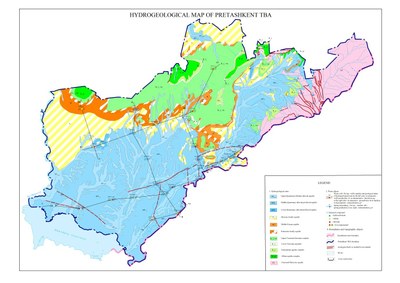
<p>The 20th session of the UNESCO International Hydrological Programme (UNESCO IHP) Intergovernmental Council recommended provision of support to selected countries in order to enable them to carry out -depth studies of their groundwater resources. <br />UNESCO IGRAC methodology developed to assess the aquifers and to define adequate indicators to support monitoring of the good status of aquifers in the chosen representative aquifers <br />Pretashkent aquifer has been selected as a case study for the GGRETA project in order to improve scientific knowledge, protect and raise recognition of the importance and vulnerability of groundwater resources in the region, develop monitoring tools for the decision makers and enhanced awareness of countries on the UNGA Resolution on the Law of Transboundary Aquifers and on the UNECE Water Convention<br />The workshop introduced the project objectives and methodology to the national exerts and to adjust the indicator based methodology to the specifics of Pretahskent aquifer. <br />The main objectives of the working meeting were to operationalize the national technical teams on the methodology used for the data collection process of hydrogeological, socio-economic, environmental, legal and institutional aspects.</p>
<p> </p>
<h3>Related resources</h3>
<p> </p>
<table class="plain">
<tbody>
<tr>
<th>Agenda of the meeting<br /><iframe frameborder="0" height="409" marginheight="0" marginwidth="0" scrolling="no" src="http://www.slideshare.net/slideshow/embed_code/38944490?rel=0" width="384"></iframe></th><th>List of participants<br /><iframe frameborder="0" height="409" marginheight="0" marginwidth="0" scrolling="no" src="http://www.slideshare.net/slideshow/embed_code/38944482?rel=0" width="384"> </iframe>
<div><b> <a href="https://www.slideshare.net/groundwatercop/participants-list-technical-meeting-july-2014" target="_blank" title="Participants list technical meeting - july 2014"></a></b></div>
</th><th>Organigram for Pretahsken<br /> <iframe frameborder="0" height="291" marginheight="0" marginwidth="0" scrolling="no" src="http://www.slideshare.net/slideshow/embed_code/38944492?rel=0" width="342"> </iframe>
<div><b> <a href="https://www.slideshare.net/groundwatercop/pretashkent-organigramme" target="_blank" title="Pretashkent organigramme"></a></b></div>
</th>
</tr>
</tbody>
</table>
<p><br /><br /></p>]]></content:encoded>
    <dc:publisher>No publisher</dc:publisher>
    <dc:creator>l.minelli@unesco.org</dc:creator>
    <dc:rights></dc:rights>
    <dc:date>2014-09-10T22:47:30Z</dc:date>
    <dc:type>Portlet Page</dc:type>
  </item>


  <item rdf:about="http://groundwatercop.iwlearn.net/news/iucn-water-partners/071ca9926041ef4443a0c2a69ba25061">
    <title>When disasters and conflicts collide: improving links between disaster resilience and conflict prevention</title>
    <link>http://groundwatercop.iwlearn.net/news/iucn-water-partners/071ca9926041ef4443a0c2a69ba25061</link>
    <description></description>
    <content:encoded xmlns:content="http://purl.org/rss/1.0/modules/content/"><![CDATA[]]></content:encoded>
    <dc:publisher>No publisher</dc:publisher>
    <dc:creator>taya</dc:creator>
    <dc:rights></dc:rights>
    <dc:date>2013-02-28T10:47:21Z</dc:date>
    <dc:type>Feed Item</dc:type>
  </item>


  <item rdf:about="http://groundwatercop.iwlearn.net/news/iucn-water-partners/14933e71003e7e304851498100dd0667">
    <title>Wetlands, P-Patches amid apartment and office blocks</title>
    <link>http://groundwatercop.iwlearn.net/news/iucn-water-partners/14933e71003e7e304851498100dd0667</link>
    <description></description>
    <content:encoded xmlns:content="http://purl.org/rss/1.0/modules/content/"><![CDATA[]]></content:encoded>
    <dc:publisher>No publisher</dc:publisher>
    <dc:creator>taya</dc:creator>
    <dc:rights></dc:rights>
    <dc:date>2013-02-28T10:17:32Z</dc:date>
    <dc:type>Feed Item</dc:type>
  </item>


  <item rdf:about="http://groundwatercop.iwlearn.net/images/webinar.png">
    <title>webinarscreen</title>
    <link>http://groundwatercop.iwlearn.net/images/webinar.png</link>
    <description></description>
    
    <dc:publisher>No publisher</dc:publisher>
    <dc:creator>l.minelli@unesco.org</dc:creator>
    <dc:rights></dc:rights>
    <dc:date>2013-11-28T16:25:08Z</dc:date>
    <dc:type>Image</dc:type>
  </item>


  <item rdf:about="http://groundwatercop.iwlearn.net/webinars">
    <title>Webinars</title>
    <link>http://groundwatercop.iwlearn.net/webinars</link>
    <description></description>
    
    <dc:publisher>No publisher</dc:publisher>
    <dc:creator>l.minelli@unesco.org</dc:creator>
    <dc:rights></dc:rights>
    <dc:date>2014-04-07T10:59:04Z</dc:date>
    <dc:type>Folder</dc:type>
  </item>


  <item rdf:about="http://groundwatercop.iwlearn.net/webinar-groundwater-in-global-processes-iywc-post-2015-sdgs">
    <title>Webinar: "Groundwater in Global Processes: IYWC, post-2015, SDGs</title>
    <link>http://groundwatercop.iwlearn.net/webinar-groundwater-in-global-processes-iywc-post-2015-sdgs</link>
    <description>Lucilla Minelli  Lucilla Minelli  l.minelli@unesco.org</description>
    <content:encoded xmlns:content="http://purl.org/rss/1.0/modules/content/"><![CDATA[]]></content:encoded>
    <dc:publisher>No publisher</dc:publisher>
    <dc:creator>l.minelli@unesco.org</dc:creator>
    <dc:rights></dc:rights>
    <dc:date>2013-10-27T00:35:12Z</dc:date>
    <dc:type>Event</dc:type>
  </item>


  <item rdf:about="http://groundwatercop.iwlearn.net/images/copy_of_webinarscreen_play.jpg">
    <title>webinar play</title>
    <link>http://groundwatercop.iwlearn.net/images/copy_of_webinarscreen_play.jpg</link>
    <description></description>
    
    <dc:publisher>No publisher</dc:publisher>
    <dc:creator>l.minelli@unesco.org</dc:creator>
    <dc:rights></dc:rights>
    <dc:date>2013-11-30T13:23:02Z</dc:date>
    <dc:type>Image</dc:type>
  </item>


  <item rdf:about="http://groundwatercop.iwlearn.net/images/webinarscreen_play.jpg">
    <title>webinar play</title>
    <link>http://groundwatercop.iwlearn.net/images/webinarscreen_play.jpg</link>
    <description></description>
    
    <dc:publisher>No publisher</dc:publisher>
    <dc:creator>l.minelli@unesco.org</dc:creator>
    <dc:rights></dc:rights>
    <dc:date>2013-12-07T15:44:35Z</dc:date>
    <dc:type>Image</dc:type>
  </item>


  <item rdf:about="http://groundwatercop.iwlearn.net/images/webinar-agenda2">
    <title>webinar agenda2</title>
    <link>http://groundwatercop.iwlearn.net/images/webinar-agenda2</link>
    <description></description>
    
    <dc:publisher>No publisher</dc:publisher>
    <dc:creator>l.minelli@unesco.org</dc:creator>
    <dc:rights></dc:rights>
    <dc:date>2014-07-01T22:41:42Z</dc:date>
    <dc:type>Image</dc:type>
  </item>


</rdf:RDF>
